Mount Carmel Haven
Regenerative Education, Healing & Ecological Intelligence Center
Mount Carmel | 2026 | Concept Development
Project Overview
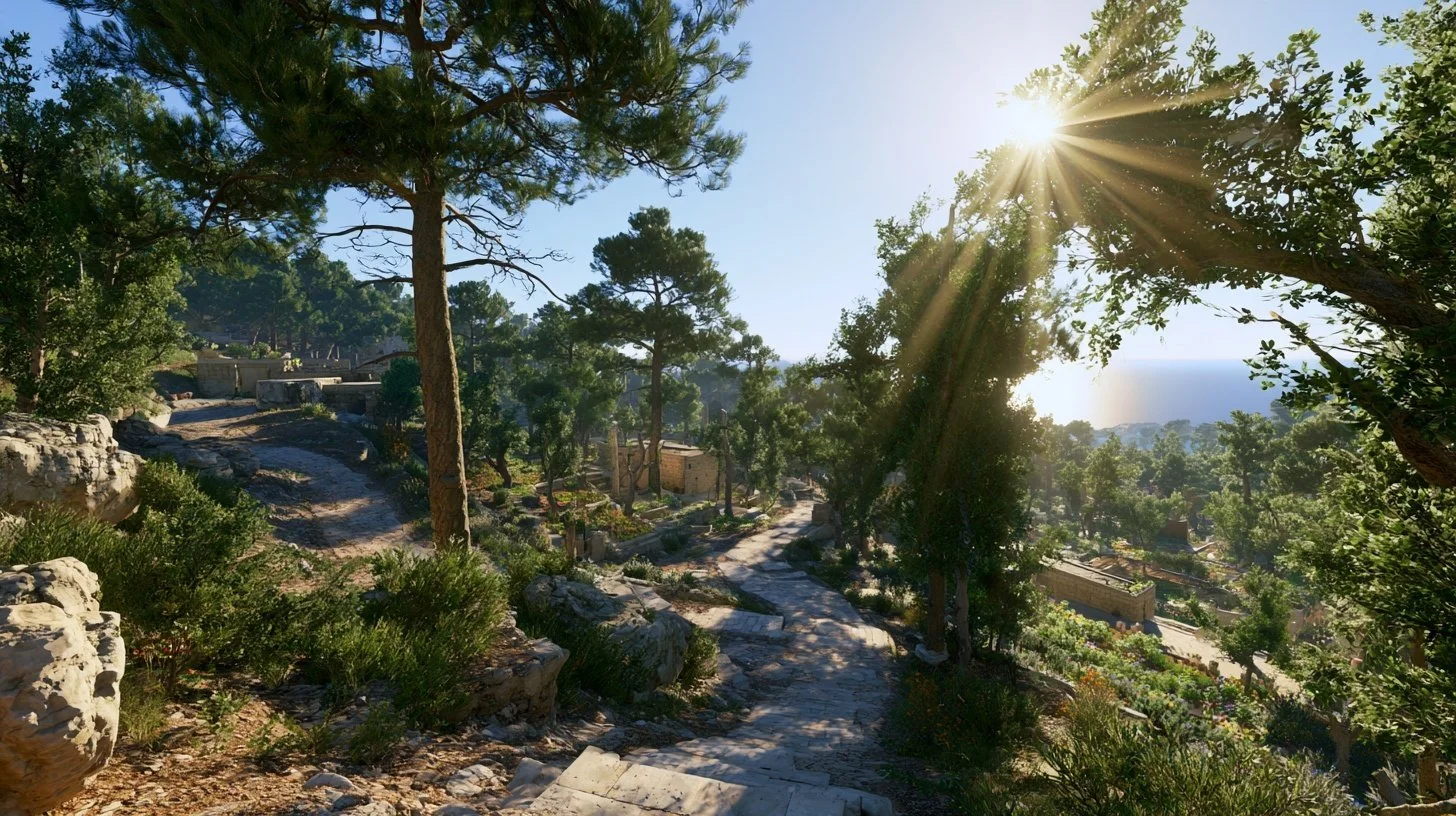
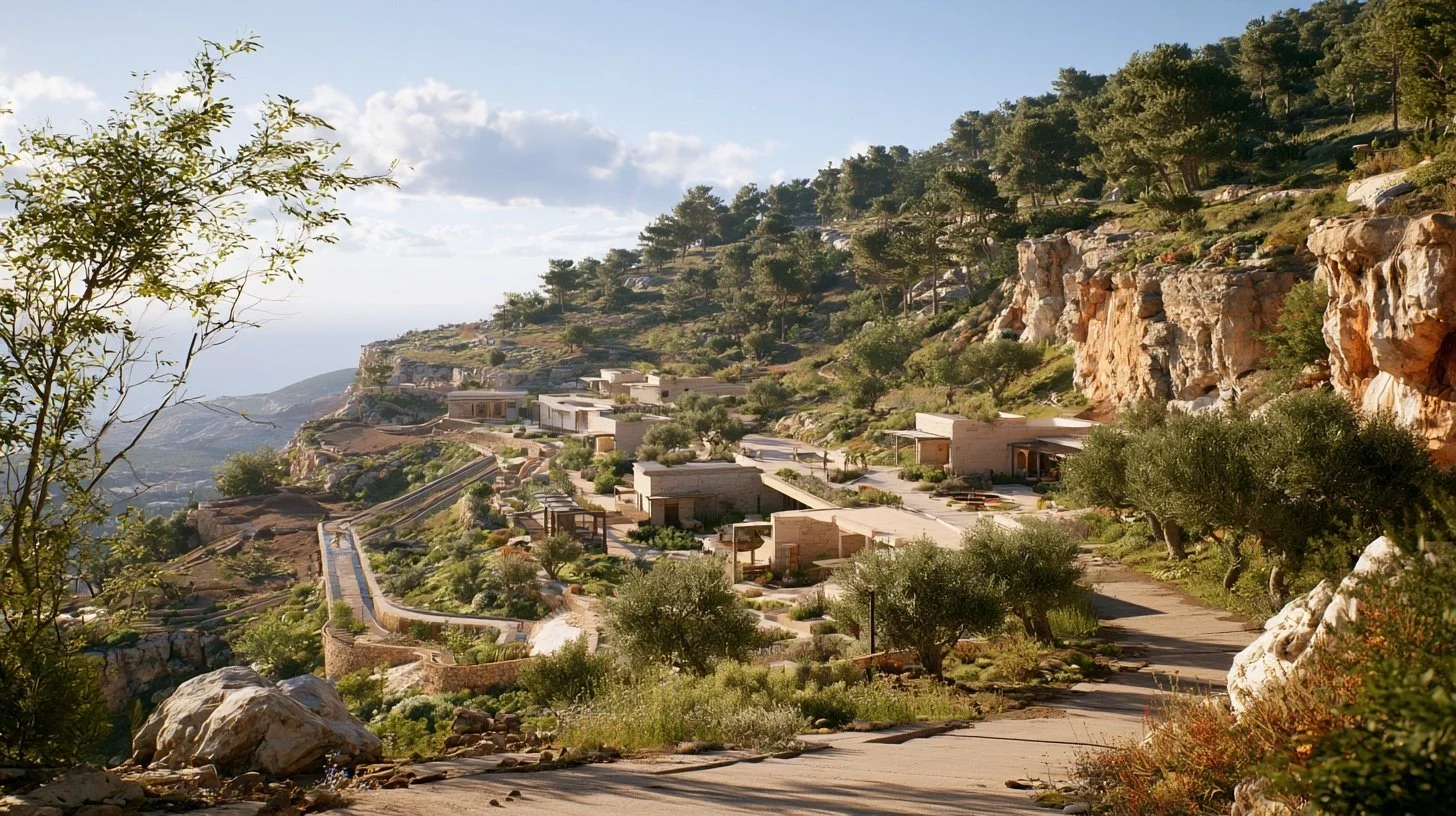
Mount Carmel Haven is a developing concept for a regenerative education and healing landscape in which architecture, ecological restoration, environmental sensing, and human experience are designed as parts of a single living system.
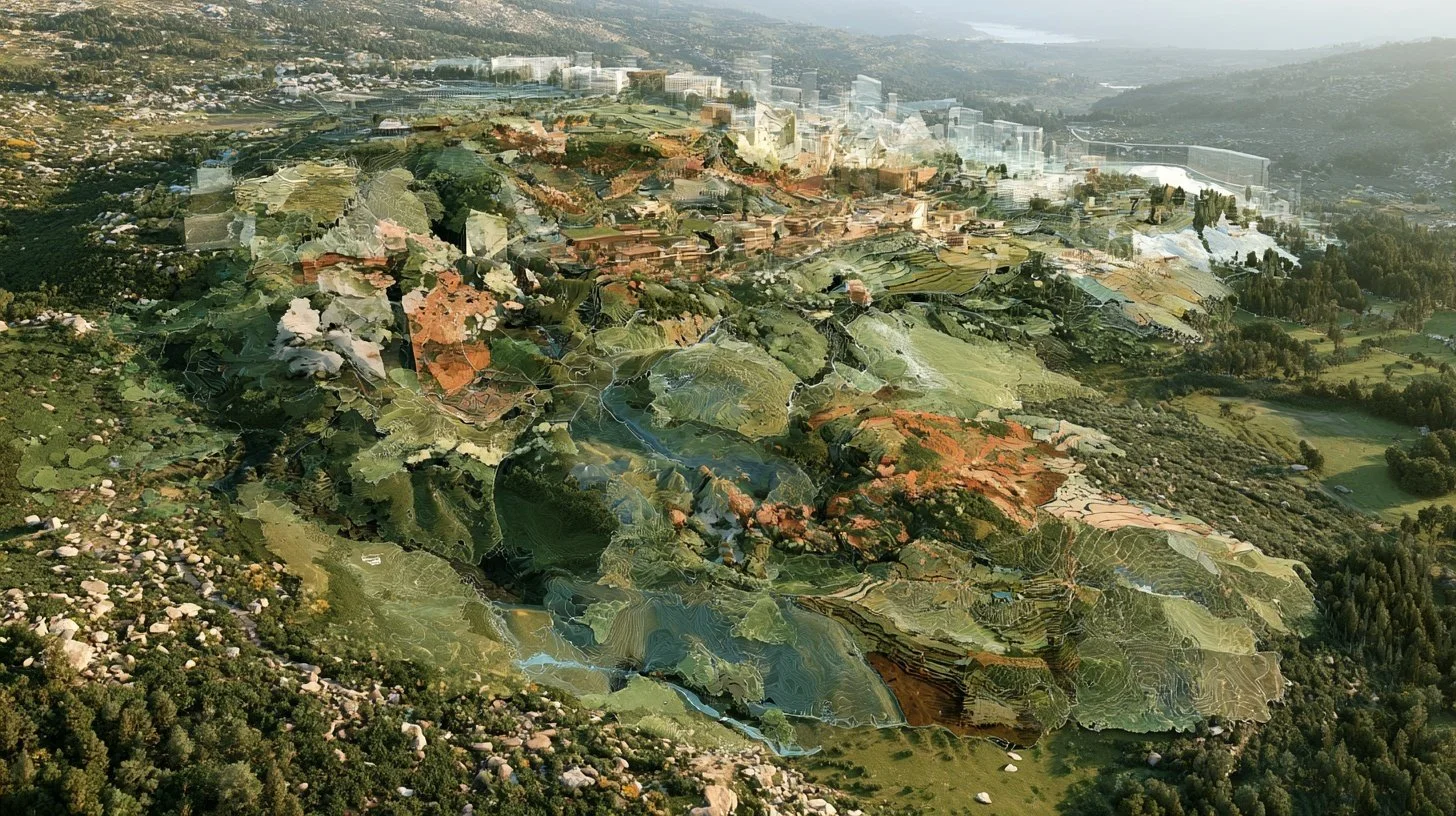
The project begins not with a building, but with the landscape.
GIS-based site analysis investigates topography, hydrology, solar exposure, vegetation, habitat, access, disturbance, and ecological constraints. These environmental layers become the foundation from which circulation, structures, water systems, restoration zones, productive landscapes, and gathering spaces can emerge.
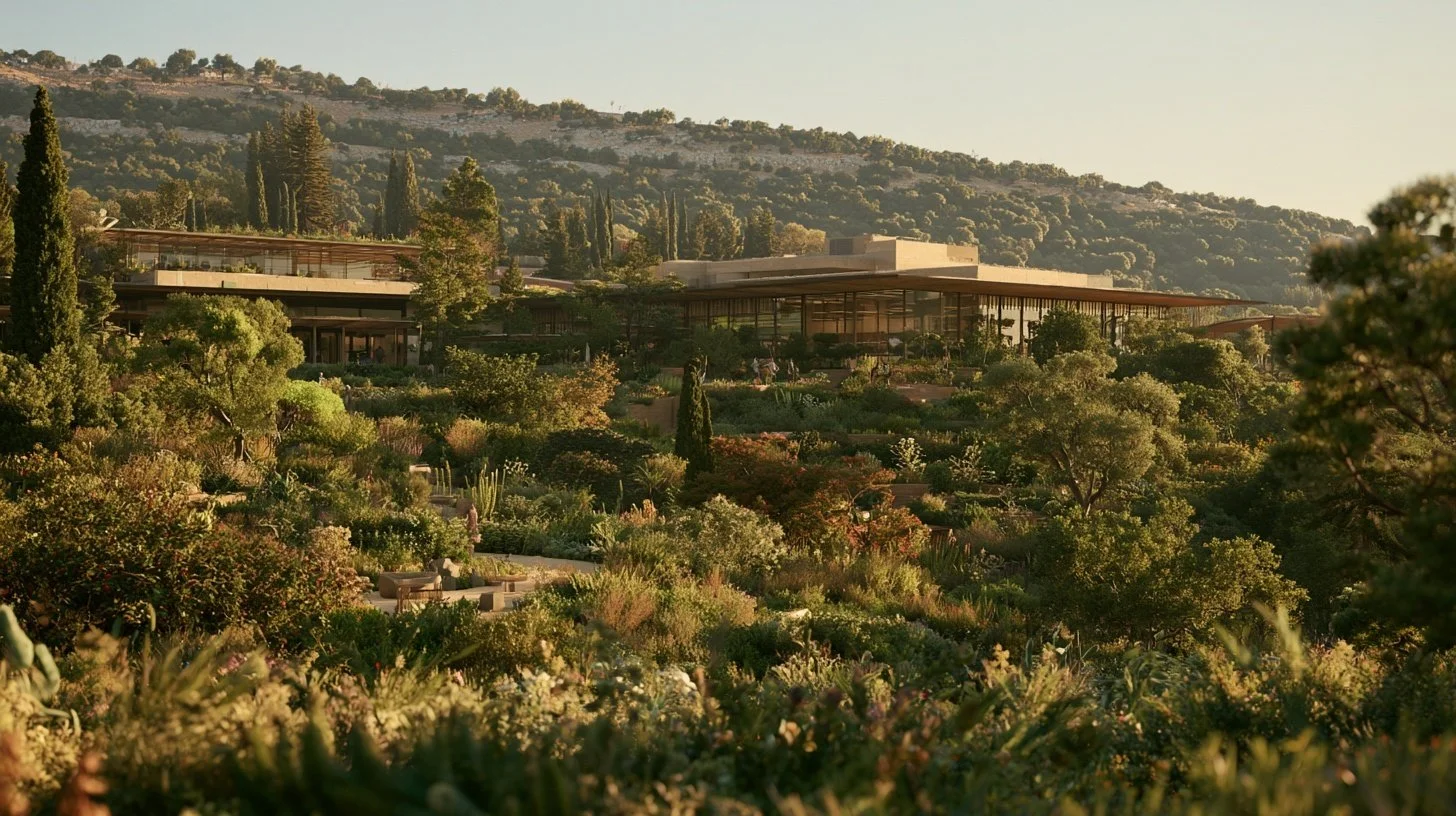
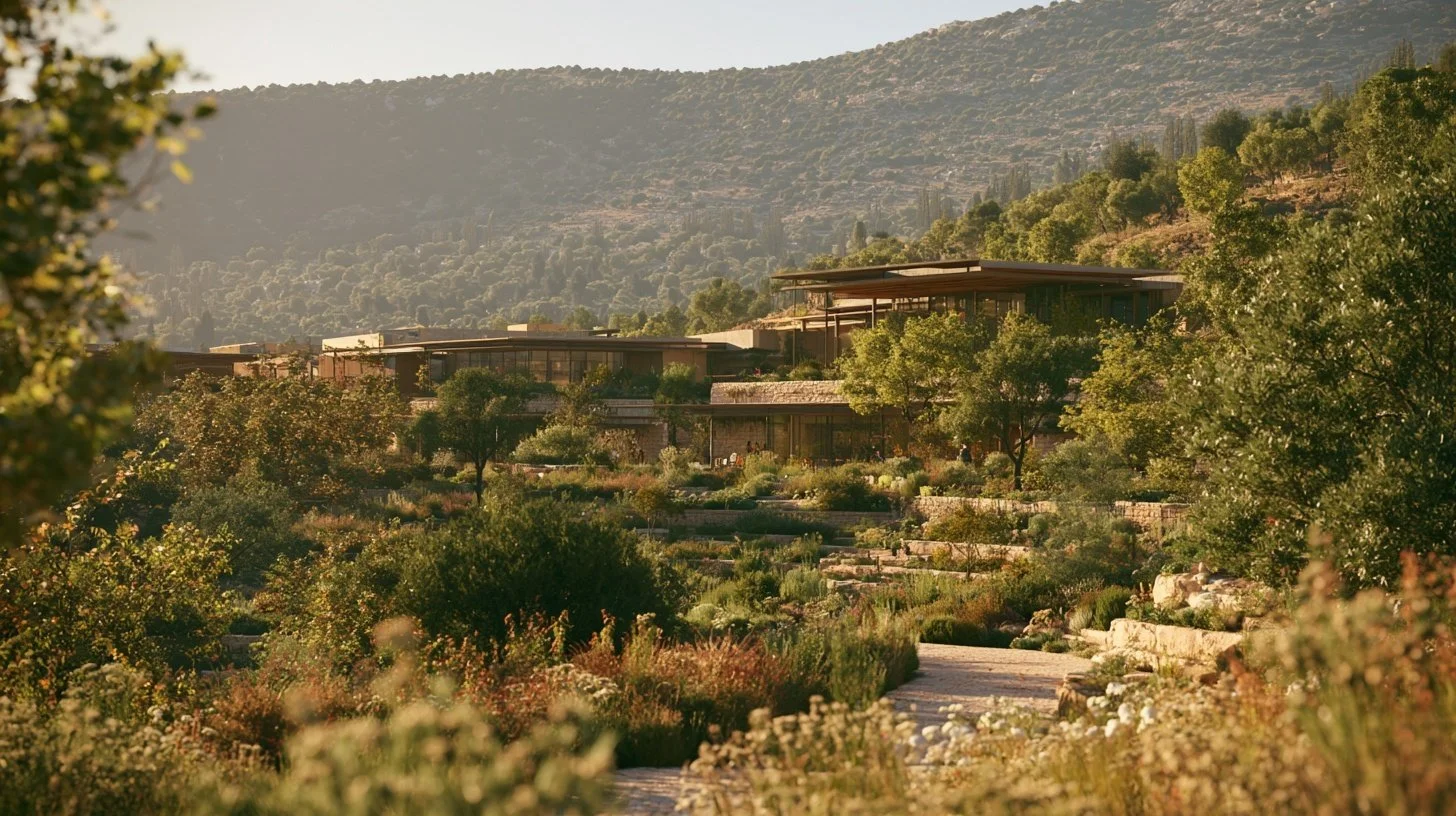
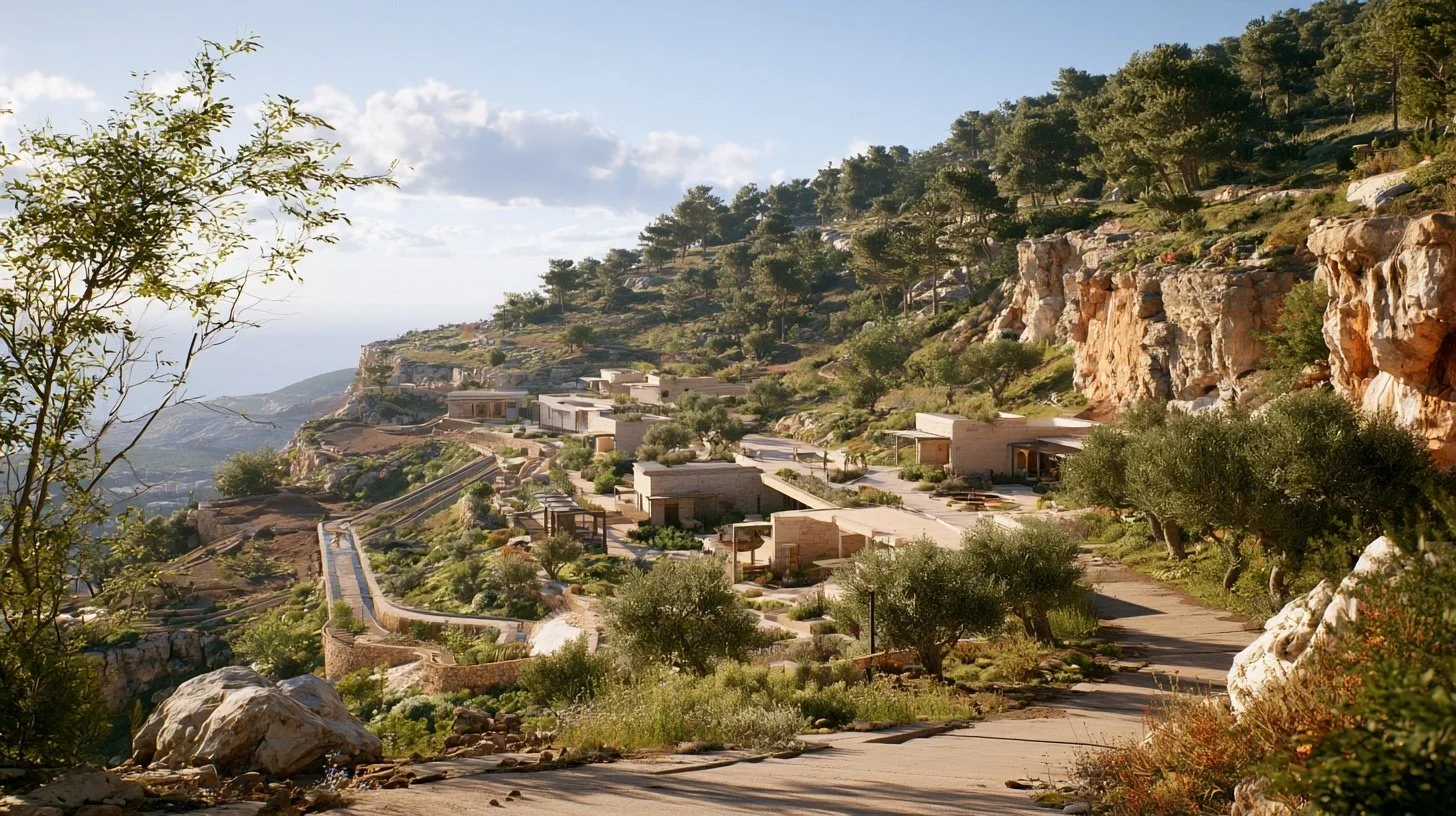
Rather than concentrating the program within one monumental structure, Mount Carmel Haven imagines a distributed campus embedded gently within the terrain: small learning and research spaces, therapeutic landscapes, shaded courtyards, contemplative gardens, food and medicinal plant systems, water-harvesting landscapes, ecological restoration areas, outdoor classrooms, and spaces for community gathering.
The landscape itself becomes both teacher and infrastructure.
A Landscape That Can Be Read
Environmental sensing is conceived as another layer of the architecture.
Distributed low-power sensors could observe conditions such as:
soil moisture
soil temperature
electrical conductivity
ambient temperature and humidity
rainfall and water movement
microclimatic variation
changing ecological conditions
Through LoRaWAN and the emerging HAVEN framework, those observations can become spatial information rather than isolated numbers.
The campus could therefore serve simultaneously as a place of restoration and as an instrument for understanding restoration.
Computational Design + Digital Twin
The developing workflow connects several scales of design:
ArcGIS Pro
Terrain • hydrology • vegetation • environmental constraints • ecological opportunity • site suitability
SketchUp
Architectural massing • circulation • spatial relationships • human-scale design
Twinmotion + Lumion
Landscape atmosphere • planting • water • materiality • seasonal and experiential visualization
Unreal Engine
Interactive digital twin • scenario exploration • environmental-data visualization • immersive education
HAVEN + Environmental Sensing
Physical landscape conditions • geospatial information • ecological performance • adaptive stewardship
Rather than using the digital twin merely as a representation of a finished place, the project explores whether it can become a living interface between landscape and steward—allowing proposed interventions, observed conditions, and future scenarios to remain in dialogue.
Current Development
Mount Carmel Haven is presently in concept and computational-design development.
GIS workflows, program relationships, regenerative water strategies, landscape interventions, sensor architecture, and digital-twin methodologies are being developed together rather than sequentially.
The project asks a larger question at the heart of Template: Terra Nova:
What might we build if the measure of successful design were not simply what occupies a landscape, but how much more alive the landscape becomes?